Corporate accountability
Read more

The intentional destruction of a national, ethnic, racial or religious group is among the gravest crimes known to international law. Civitas Maxima works to ensure that those responsible are held to account before national and international courts, on behalf of the victims and communities who survived.
Like other international crimes, Civitas Maxima fully integrates the crime of genocide into its legal analysis when assessing the prospects of obtaining justice for victims. Complaints are therefore filed whenever it is legally possible to do so before a national court, provided that the required constituent elements are met, as assessed by our lawyers.
Genocide is characterized by a specific intent (dolus specialis), which distinguishes it from other mass crimes. It is not sufficient to show large-scale killing; it must be proven that there was a deliberate intent to destroy a group “as such.” This intent is often difficult to establish and represents one of the main challenges in legally qualifying acts as genocide.
The Convention prohibits genocide and specifies that it may be committed in times of peace as well as in times of war. It obliges states to prevent and punish genocide—failure to do so may engage their international responsibility—and establishes individual criminal responsibility for genocide and related acts, including conspiracy, incitement, attempt, and complicity.
In addition to national mechanisms, genocide may be prosecuted before international courts. The first convictions were handed down by the ad hoc international criminal tribunals established in 1993 and 1994 by the United Nations Security Council.
Established by the Rome Statute (1998), the International Criminal Court has jurisdiction to prosecute genocide committed after 2002, provided that the crime was committed on the territory of a State Party, by a national of a State Party, or pursuant to a referral by the United Nations Security Council.
At the national level, several states—including Germany, Argentina, Belgium, France, and Switzerland—have incorporated the crime of genocide into their domestic legislation, either by strictly adopting the Convention’s definition or by expanding it, as is the case in Switzerland. This criminalization enables their courts to prosecute those responsible, including for acts committed abroad, within the limits set by their national law.
Read more
Read more
Read more
Read more
Read more
Read more
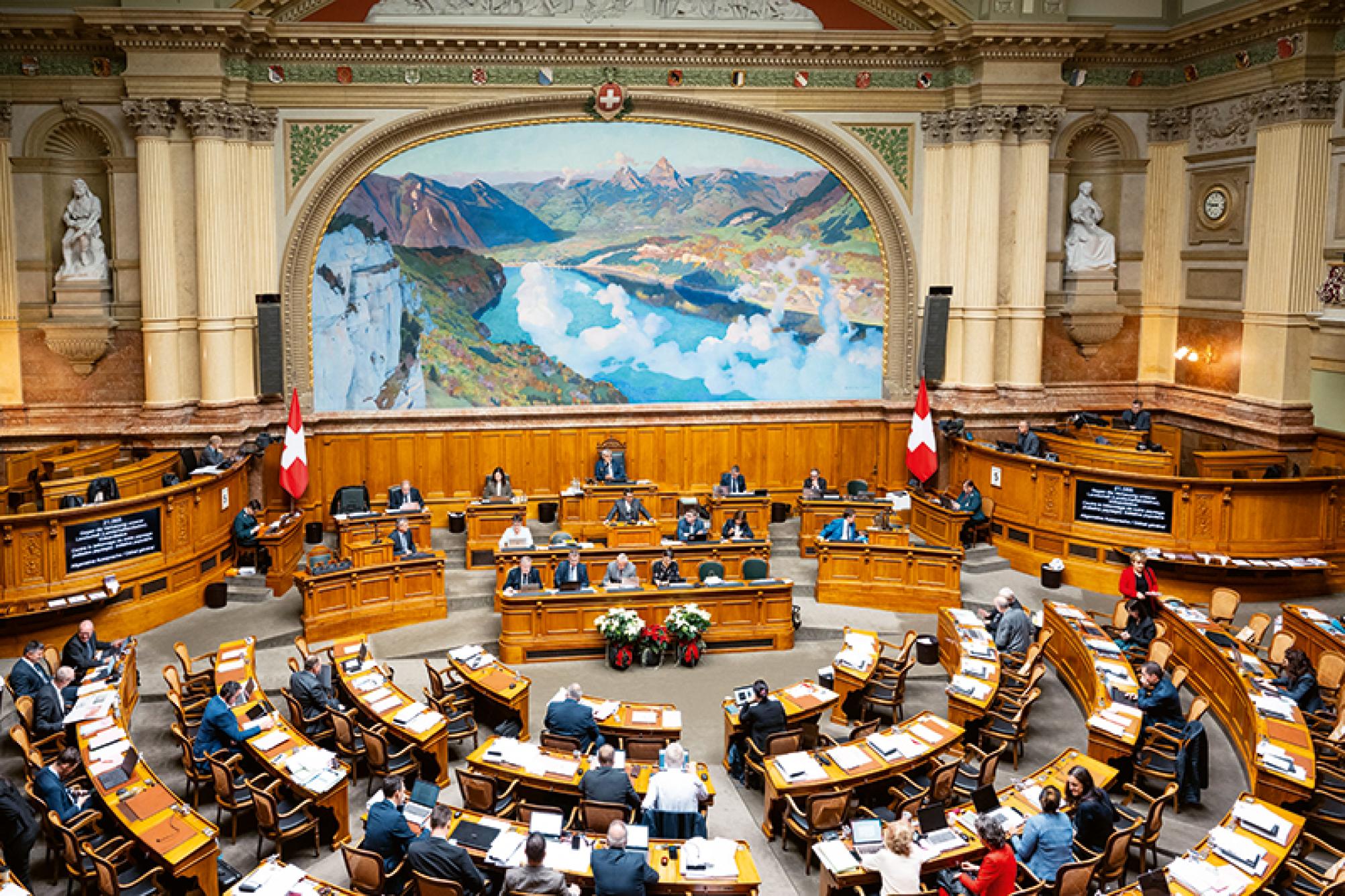
On October 31, the Legal Affairs Committee of the National Council decided to continue its work on the preliminary draft of the federal law on the inclusion of torture in the Swiss Criminal Code, paving the way for its consideration by Parliament.
In a court order issued on June 25, 2024, the Cour de Cassation, France’s highest judicial body, ruled that Kunti Kamara’s pourvoi en cassation had lapsed after failing to meet the legal deadline for submitting his legal argument memo.
Today, the Paris “Cour d’assises” confirmed the 2022 guilty verdict and found Kunti Kamara, former Liberian ULIMO rebel commander, guilty of complicity in crimes against humanity, and commission of simple and aggravated acts of torture and barbarism.