
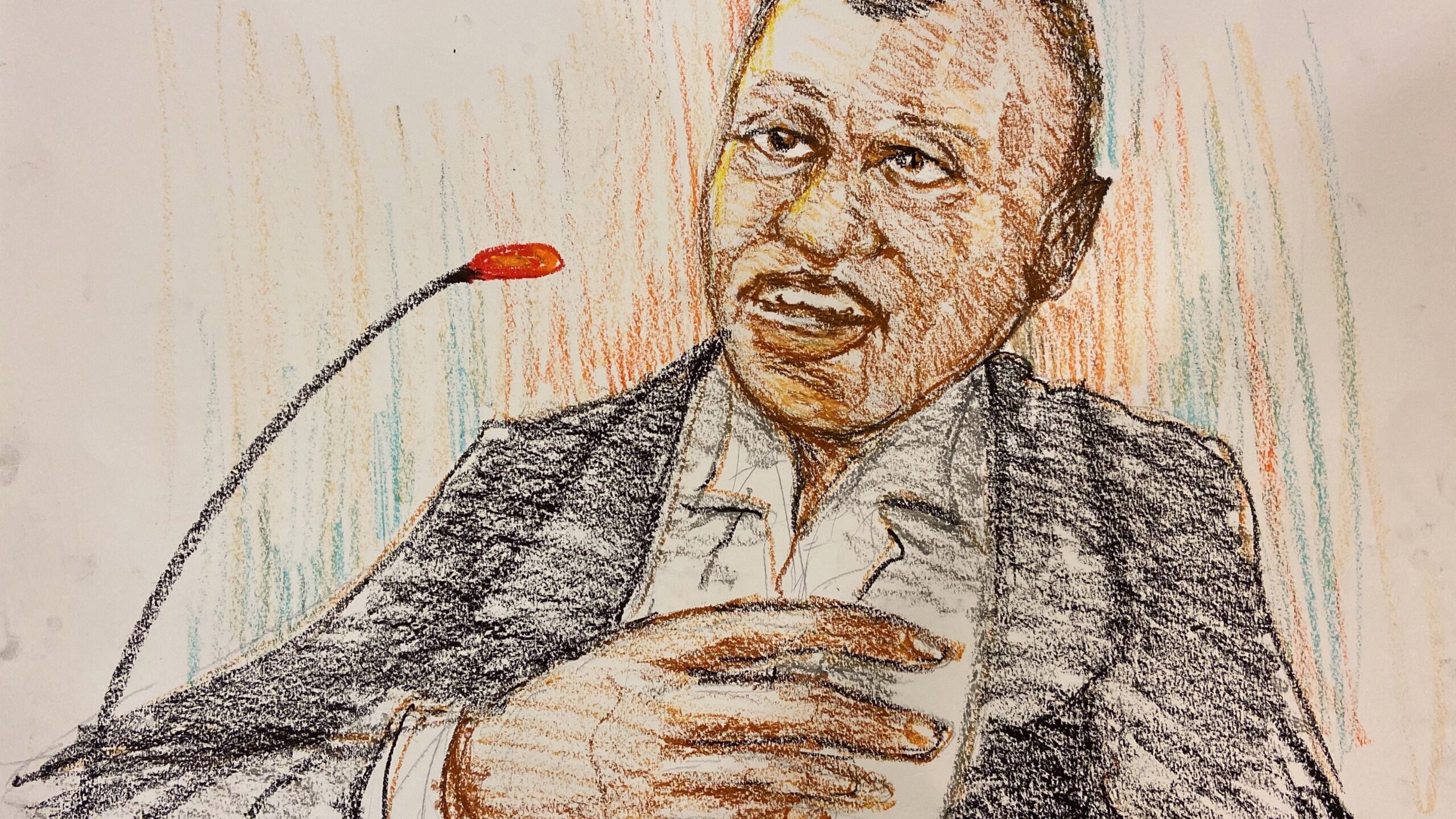
The Kosiah case lies at the heart of unprecedented judicial developments in the prosecution of the most serious international crimes (known as core crimes). A former commander of a rebel armed group during Liberia’s first civil war, Alieu Kosiah was arrested in Lausanne in 2014. On June 18, 2021, the Swiss Federal Criminal Court sentenced him to 20 years in prison for multiple war crimes committed between 1993 and 1995, a conviction upheld on appeal on May 30, 2023. Notably, the Appeals Chamber classified the murders of which he had already been convicted, and only those murders, as crimes against humanity.
The case is unprecedented in Switzerland. The Federal Criminal Court’s judgment was the first conviction for war crimes by a civilian court, and the Appeals Chamber’s ruling was the first conviction for crimes against humanity. These two “firsts” rest on universal jurisdiction, which allows judges to rule on certain categories of particularly serious crimes committed abroad where neither the perpetrators nor the victims are Swiss nationals. The historic significance of the Kosiah case is all the more striking given an institutional landscape in which national authorities have been reluctant to prosecute core crimes.
When Alieu Kosiah appealed to the Federal Supreme Court in 2024, the country’s highest court faced for the first time the question of whether Article 264a of the Criminal Code, which has defined crimes against humanity in Swiss law only since 2011, can apply to acts committed before that date, as the Appeals Chamber of the Federal Criminal Court had found. In other words, does the fight against impunity for the most serious international crimes justify a departure from the principles of legality and non‑retroactivity of criminal law, which are guaranteed in that same Code?
In its judgment published on October 30, the Federal Supreme Court upheld the war crimes conviction and the sentence of 20 years, but acquitted Alieu Kosiah of crimes against humanity through a strict application of the requirements of legality. In doing so, it took the opposite view to the appeal judges and adopted an approach far removed from the one found, in particular, in the case law of the European Court of Human Rights (ECtHR) and of the ad hoc international criminal tribunals of the early 1990s. The Appeals Chamber had relied on a dynamic interplay between national and international law. The Federal Supreme Court, by contrast, relied exclusively on Swiss law and anchored itself in a strict legalism that some would call excessive formalism. Among other things, the two courts disagree on how to understand the notion of legality, and on the conceptual and legal distinctions between “classification,” “criminalization” and “definition.” These diverging positions show how pressing the questions are around how judges interpret the requirements of legality and choose the applicable law to do so, questions of particular interest in cases of universal jurisdiction. The same goes for the conditions under which international norms, including jus cogens (peremptory law binding on States and individuals alike) such as the customary criminalization of core crimes, can apply directly in criminal matters.
In addition, the Federal Supreme Court’s judgment offers no comparative analysis of other legal systems, even though the court regularly draws on such analysis in its case law. Like international law, comparative law, which is just as rich in this field, is an integral part of the tools available to supreme court judges. It would have been appropriate to use the comparative method in this case, particularly as the ECtHR may well draw on it if the case is brought before it.
Finally, the value of legal history in judicial practice is underestimated, and here it deserved more attention from the Federal Supreme Court. The question of how to reconcile the demands of the fight against impunity for core crimes with the requirements of legality is neither new nor settled. It has accompanied the genealogy of international criminal law and the history of international criminal justice, from the first attempts to develop them after the First World War to their implementation by supranational and national courts from 1945 onward. This question has given rise to decisive developments in case law and countless scholarly works, offering legal answers that are inspiring, to say the least. The historical construction of the law on the most serious international crimes sheds light on the challenges of prosecuting them today. It is therefore regrettable that this dimension was overlooked.
The impact of the Federal Supreme Court’s judgment remains to be seen, as the outcome of the appeal trial of Gambian national Ousman Sonko approaches. A former Minister of the Interior under the Jammeh regime, he was convicted of crimes against humanity for acts committed between 2000 and 2016 and sentenced to 20 years in prison on May 15, 2024. The Appeals Chamber of the Federal Criminal Court will deliver its ruling on December 1.
A shorter version of this article was first published in French in Le Temps on November 13, 2026.